
Overview
For centuries, medicine treated the mind and the digestive system as entirely separate domains. A stomach-ache was a stomach problem; anxiety was a brain problem. Modern neuroscience has dismantled that boundary. We now understand that the gut and the brain are locked in constant, intimate dialogue — and that for many people, particularly those wired toward sensitivity, anxiety, and empathy, the gut may be one of the most eloquent voices the nervous system has.
This article explores the science of the gut-brain axis, and asks a deeper question: could what we label as Irritable Bowel Syndrome (IBS) be, at least in part, the physical signature of a nervous system that feels everything — intensely?
The Second Brain: Architecture of the Gut-Brain Axis
Hidden within the walls of the digestive tract lives a vast, sophisticated network of more than 100 million nerve cells, winding from the oesophagus to the rectum. Scientists call this the enteric nervous system (ENS) — colloquially, “the second brain.” Unlike the brain in our skull, the ENS does not write poetry or solve equations, but it does govern the entire machinery of digestion: enzyme release, blood flow to gut tissue, motility, and the complex rhythms of muscular contraction that move food through the body.
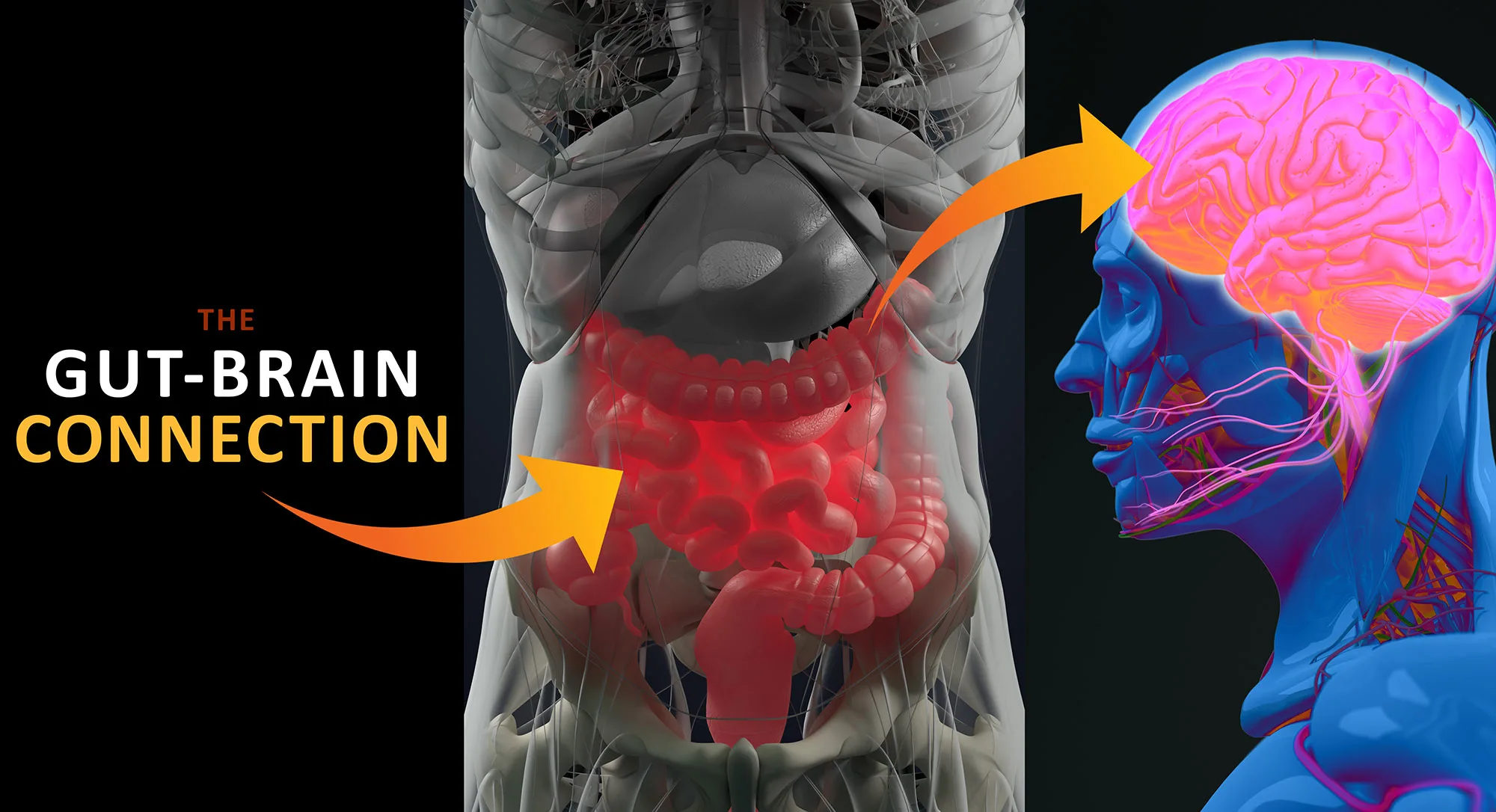
The ENS does not operate in isolation. It communicates upward and downward along what researchers call the gut-brain axis (GBA) — a bidirectional communication superhighway that links emotional and cognitive centres of the brain with peripheral intestinal functions. The channels of this axis are multiple and layered: neural signals, hormones, immune messengers, and the metabolic activity of the trillions of microorganisms collectively known as the microbiome.
At the anatomical centre of this communication network sits the vagus nerve — the principal component of the parasympathetic nervous system, composed of approximately 80% afferent (gut-to-brain) fibres and only 20% efferent (brain-to-gut) fibres. This ratio is remarkable: the gut talks to the brain far more than the brain talks back. The vagus nerve senses microbial metabolites, detects inflammatory signals, and relays the gut’s internal landscape to the central nervous system in real time. When that communication becomes dysregulated — through chronic stress, trauma, or a nervous system tuned to high sensitivity — the consequences reach far beyond digestion.
Serotonin: The Shared Language of Gut and Mind
Most people associate serotonin with mood. What fewer people know is that approximately 90–95% of the body’s serotonin is produced not in the brain, but in the gut — specifically by specialised cells called enterochromaffin cells lining the intestinal walls. This gut-derived serotonin plays a primary role in regulating gut motility: it signals muscles to contract, propelling food forward, and must be inactivated once its task is complete.
A deficit of serotonin in the gut has been directly associated with IBS. Furthermore, disruptions to the serotonin transport system — the mechanism that clears serotonin after use — have been implicated in both functional gastrointestinal disorders and mood disorders simultaneously. This overlap is not coincidental. Research from Columbia University has demonstrated that boosting serotonin signalling selectively in the gut reduces anxiety and depressive-like behaviours in animal models — suggesting that antidepressants may achieve their effects partly, perhaps substantially, by acting on the gut rather than the brain.
The relationship is bidirectional and elegant: a disturbed gut produces disrupted serotonin signalling, which feeds back into mood and anxiety. A distressed brain sends destabilising signals to the gut, altering its biochemistry and function. The two organs are not merely connected — they are, in a meaningful physiological sense, the same system expressed in two locations.
IBS: A Disorder of the Gut-Brain Axis
Irritable Bowel Syndrome affects an estimated 10–15% of adults globally. Its hallmarks — abdominal pain, bloating, altered bowel habits, unpredictable cramping — have frustrated both sufferers and clinicians because no structural abnormality can be found to explain them. The gut looks normal. Yet it behaves as though under siege.
The current consensus in gastroenterology classifies IBS as a disorder of gut-brain interaction (DGBI). Research suggests that IBS stems not from a problem within the gut itself, but from a miscommunication along the neural pathways connecting gut and brain — particularly through the vagus nerve. Crucially, the condition involves a phenomenon called visceral hypersensitivity: the ENS nerves send stronger pain signals to the brain in response to normal gut activity, such as gas or muscle contractions, that would cause a non-IBS person no distress at all.
A person with IBS may eat pizza and experience the same gas or bloating as anyone else — but their nervous system registers it as pain. That signal travels upward to the brain, which amplifies the alarm, sending further distress signals back down to the gut. The result is a feedback loop of suffering driven not by tissue damage, but by a nervous system in a state of chronic hypersensitivity. Brain imaging studies have confirmed this: people with IBS show measurable differences in the way the brain responds to gut sensations.
The Anxious Gut: Stress, the HPA Axis, and the IBS Cycle
When the brain perceives threat — whether physical danger or the quieter pressures of daily anxiety — it activates the hypothalamic-pituitary-adrenal (HPA) axis, triggering the release of stress hormones including cortisol. Through the gut-brain axis, these stress signals alter gut permeability, modify the local immune response, and disrupt the composition of the microbiome. The sympathetic nervous system — the “fight or flight” branch — suppresses digestion, tightening the gut’s muscles and reducing blood flow to the intestinal walls.
For people with IBS, this stress response appears to be both more easily triggered and more difficult to switch off. A landmark study published in Nature Translational Psychiatry in 2026 found that individuals with high emotional neglect and abuse patterns in childhood showed significantly elevated IBS risk — with hazard ratios of 1.38 and 1.64 respectively compared to low-adversity controls. A separate case-control study of 409 IBS patients found that 74% had experienced childhood trauma, compared with 59% of matched controls. The brain-gut axis, it appears, carries the imprint of our earliest wounds.
The clinical psychologist Megan Riehl of Michigan Medicine describes what she calls the “GI stress cycle”: IBS symptoms cause anxiety; anxiety causes heightened nervous system arousal; that arousal amplifies gut hypersensitivity; worsening symptoms cause more anxiety. The gut and the mind form a closed loop, each feeding the other’s distress — and without intervention at the level of the nervous system, that cycle may never break.
Sensitivity, Empathy, and the Hypersensitive Gut
Here is where the science becomes particularly resonant for a certain kind of person. Research by psychologist Elaine Aron at Stony Brook University has identified that approximately 20% of the human population are Highly Sensitive Persons (HSPs) — individuals who are genetically predisposed toward deeper sensory and emotional processing, heightened awareness of subtle stimuli, and greater empathic responsiveness. fMRI studies have shown that HSPs exhibit substantially greater activity in brain regions associated with awareness and empathy when exposed to emotional content.
This heightened neurological responsiveness does not stay confined to social and emotional domains. The same sensitised nervous system that allows an HSP to feel the emotional undercurrents in a room, to absorb others’ distress somatically, and to notice what others entirely miss — that same nervous system regulates the gut. Because IBS is fundamentally a condition of miscommunication along the nervous system’s pathways, and because HSPs possess more reactive nervous systems, there is sound biological reasoning to suggest that high sensitivity contributes to gastrointestinal vulnerability.
In HSPs, the vagus nerve — already prone to strong responses to external emotional stimuli — may produce physical sensations such as nausea, gut tightening, or cramping in response to emotionally charged environments. The gut, in these individuals, is not malfunctioning. It is responding exactly as the nervous system instructs it to — with full fidelity to the internal emotional landscape. The problem is that the nervous system is turned up, the threshold for signal transmission is lower, and everything feels louder.
This points toward a reframing that is both clinically useful and humanely significant – a point to ponder:
IBS in sensitive, anxious, empathic people may not be a disease of the gut at all. It may be the gut’s translation of a nervous system that has never learned — or never been allowed — to feel safe.
The Biopsychosocial Reality of IBS
The biopsychosocial model of IBS, supported by substantial clinical evidence, holds that the condition arises from a complex interaction of biological predisposition, psychological factors, and social experience. Early life experiences — loss, abuse, emotional neglect, chronic invalidation — can produce lasting alterations in HPA axis reactivity, gut permeability, and brain-gut signalling. Children who learn to suppress emotional expression, or who grow up in environments where feelings are dismissed, may become conditioned to express distress through somatic symptoms — including gut symptoms — because that is the only language available to them.
This is not to suggest that IBS is “psychosomatic” in the dismissive, culturally loaded sense of that term — meaning imagined, exaggerated, or not real. The pain is entirely real. The gut dysfunction is measurable. The inflammation, altered motility, and visceral hypersensitivity are physiological phenomena. What the biopsychosocial model argues is that these physiological phenomena are downstream of nervous system states that originated in psychological and relational experience — and that treating only the gut is therefore incomplete.
The Microbiome Connection: An Ecosystem Shaped by Stress
The trillions of microorganisms inhabiting the gut — collectively the microbiome — are not passive bystanders in this story. They produce neuroactive compounds, regulate the immune system, influence the production of neurotransmitters including serotonin and GABA, and communicate with the brain via the vagus nerve. The composition of the microbiome is profoundly sensitive to stress: chronic psychological stress has been shown to alter microbiome composition in ways that can amplify anxiety, increase gut permeability, and worsen IBS symptoms.
A 2024 Mendelian randomisation study — a method that uses genetic data to establish causation rather than mere correlation — found that specific gut microbiota species causally influence anxiety disorders, providing genetic-level evidence of a bidirectional relationship between the microbiome and psychiatric conditions. A 2025 comprehensive review confirmed that gut dysbiosis (microbial imbalance) is associated with depression, anxiety, and stress-related conditions, and that treating the microbiome holds genuine therapeutic promise for mental health.
For people with IBS, this creates an important clinical insight: the microbiome may be both a casualty of chronic nervous system activation and a perpetuating driver of it. Addressing gut bacteria through dietary change, prebiotics, or targeted probiotics — in conjunction with psychological support — may interrupt the cycle from yet another angle.
Polyvagal Theory and the Safety Signal
Dr. Stephen Porges’ Polyvagal Theory offers perhaps the most integrative lens through which to understand why some nervous systems are so much more vulnerable to gut-brain dysregulation than others. Porges identifies three evolutionary states of the autonomic nervous system: a ventral vagal state (safety, social engagement, rest-and-digest), a sympathetic state (fight or flight), and a dorsal vagal state (freeze, shutdown).
When the ventral vagal system is active — when the organism perceives safety — digestion functions efficiently, gut motility is smooth, and the nervous system is regulated. But when chronic stress, trauma, or perceived threat keeps the sympathetic or dorsal vagal systems activated, gut regulation deteriorates. Porges has proposed, and research has begun to confirm, that disorders of gut-brain interaction may reflect a fundamental deficit in vagal flexibility — the capacity of the autonomic nervous system to shift fluidly between states. Sensitive, anxious individuals may spend more time in states of sympathetic activation or dorsal shutdown, making gut dysregulation not a symptom of a gut disease, but the somatic signature of a chronically mobilised nervous system.
Treatment: Working with the Nervous System, Not Against the Gut
This framing opens significant therapeutic possibilities. If IBS is, in part, a nervous system disorder expressed through the gut, then interventions that target the nervous system directly should be among the most powerful tools available — and the evidence suggests they are.
A systematic review and network meta-analysis published in The Lancet Gastroenterology and Hepatology in 2025, comparing 67 randomised trials involving more than 7,400 participants, found that multiple brain-gut behaviour therapies significantly outperformed waitlist control for global IBS symptoms. Among the most effective approaches were:
- Cognitive behavioural therapy (CBT): both face-to-face and minimal-contact formats demonstrated robust efficacy, with relative risk reductions in persistent IBS symptoms of 39% compared with waiting list.
- Gut-directed hypnotherapy: 86% of published IBS trials reported significant reductions in gastrointestinal symptom scores following treatment, with effects spanning both psychological outcomes and measurable physiological changes in gut functionuniversalgastro.
- Mindfulness-based approaches: targeting the same autonomic nervous system pathways, these interventions help down-regulate the threat response that perpetuates the gut-brain stress cycle.
These are not merely “stress management” tools. They work because they intervene directly in the neurological mechanisms that create IBS — recalibrating the sensitivity of the vagus nerve, reducing visceral hypersensitivity, and teaching the nervous system that the present moment is, in fact, safe.
Conclusion: Listening to What the Gut Is Saying
The gut-brain axis reframes IBS not as a malfunction of an organ, but as a communication — often the most honest communication available to a nervous system that has been stretched to its limits. For people who are naturally empathic, anxiety-prone, or deeply sensitive to the emotional and sensory texture of the world, the gut is not misbehaving. It is listening — and responding — with extraordinary fidelity.
The emerging science invites a more compassionate diagnostic conversation: one that asks not just what the gut is doing, but why the nervous system that governs it has learned to respond this way. That question leads away from the gastroenterology clinic and toward the full human story of the person sitting in it — their temperament, their early experiences, their relational world, their unspoken feelings.
In that sense, the gut may be among the most psychologically honest parts of the human body. Learning to hear it, rather than silence it, may be the most important form of treatment of all.
A few highlights from the research:
- The serotonin surprise: 90–95% of the body’s serotonin is made in the gut, not the brain — and disruptions to that system are linked to both IBS and mood disorders simultaneously, suggesting these aren’t separate conditions at all.
- The HSP-IBS link: IBS fundamentally involves miscommunication in the nervous system (visceral hypersensitivity), and Highly Sensitive People have measurably more reactive nervous systems — the logical overlap is compelling.
- Childhood adversity: A large 2026 prospective cohort study found that emotional neglect and abuse patterns in childhood significantly increased IBS risk later in life, reinforcing the biopsychosocial framing beautifully.
- Polyvagal lens: Stephen Porges himself published a 2024/2025 paper specifically applying Polyvagal Theory to gut-brain disorders — a framework that speaks directly to why sensitive nervous systems are gut-vulnerable.
- Treatment evidence: Brain-gut behaviour therapies (CBT, gut-directed hypnotherapy) produced symptom reductions of 21–45% across 67 randomised trials — which only makes sense if the nervous system is the right level of intervention.
The article takes care to honour that IBS pain is entirely real and physiological — not “in the head” — while making the case that the nervous system is the origin point, particularly for sensitised, empathic people.
Article is written with the assistance of Perplexity AI.